
- by Kody Ortner
What's Actually in Your Cleaning Products? A Plain-English Ingredient Breakdown
- by Kody Ortner
Most people never read the back of their cleaning bottle. And honestly, that makes sense. The ingredient lists are long, the words are unpronounceable, and there is a quiet assumption that if a product is sitting on the shelf at a major retailer, someone somewhere has already made sure it's safe.
That assumption is worth questioning.
This isn't about fear. It's about information. Once you understand what's actually in conventional cleaners and what the alternatives look like, the choice becomes pretty straightforward. So let's break it down in plain English, the way it should have been explained a long time ago.
Conventional household cleaners were largely formulated decades ago, and the ingredient choices made then were driven primarily by one thing: effectiveness at the lowest possible cost. Petroleum-derived chemicals fit that brief well. They're cheap to produce, stable on a shelf, and they clean effectively.
The problem is that cheap and effective doesn't automatically mean safe, especially when you're using these products multiple times a week in an enclosed space, on surfaces where your kids eat, or in the same room where your pet sleeps.
Many conventional cleaners contain synthetic surfactants derived from petroleum, artificial fragrances made up of dozens of undisclosed chemical compounds, and preservative systems that rely on formaldehyde-releasing agents. None of that makes a product automatically dangerous in a single use. But daily, repeated exposure in the home environment is a different conversation, and it's one that most brands have never been motivated to have with their customers.
Surfactants are the workhorses of any cleaner. The word stands for "surface active agents," and their job is to break the bond between dirt, grease, and the surface you're trying to clean. Without surfactants, water alone just beads and runs off.
Conventional surfactants are typically derived from petroleum, a nonrenewable resource that requires significant refining. Plant-based surfactants do the same job, but they're sourced from renewable materials like corn, coconut, or sugarcane. The molecules work the same way. The source is fundamentally different.
This matters for two reasons. First, plant-derived surfactants tend to be gentler on skin with repeated contact, which is relevant when you're spraying, wiping, and rinsing surfaces throughout your home on a regular basis. Second, they break down more readily in the environment after they go down your drain, rather than persisting in waterways.
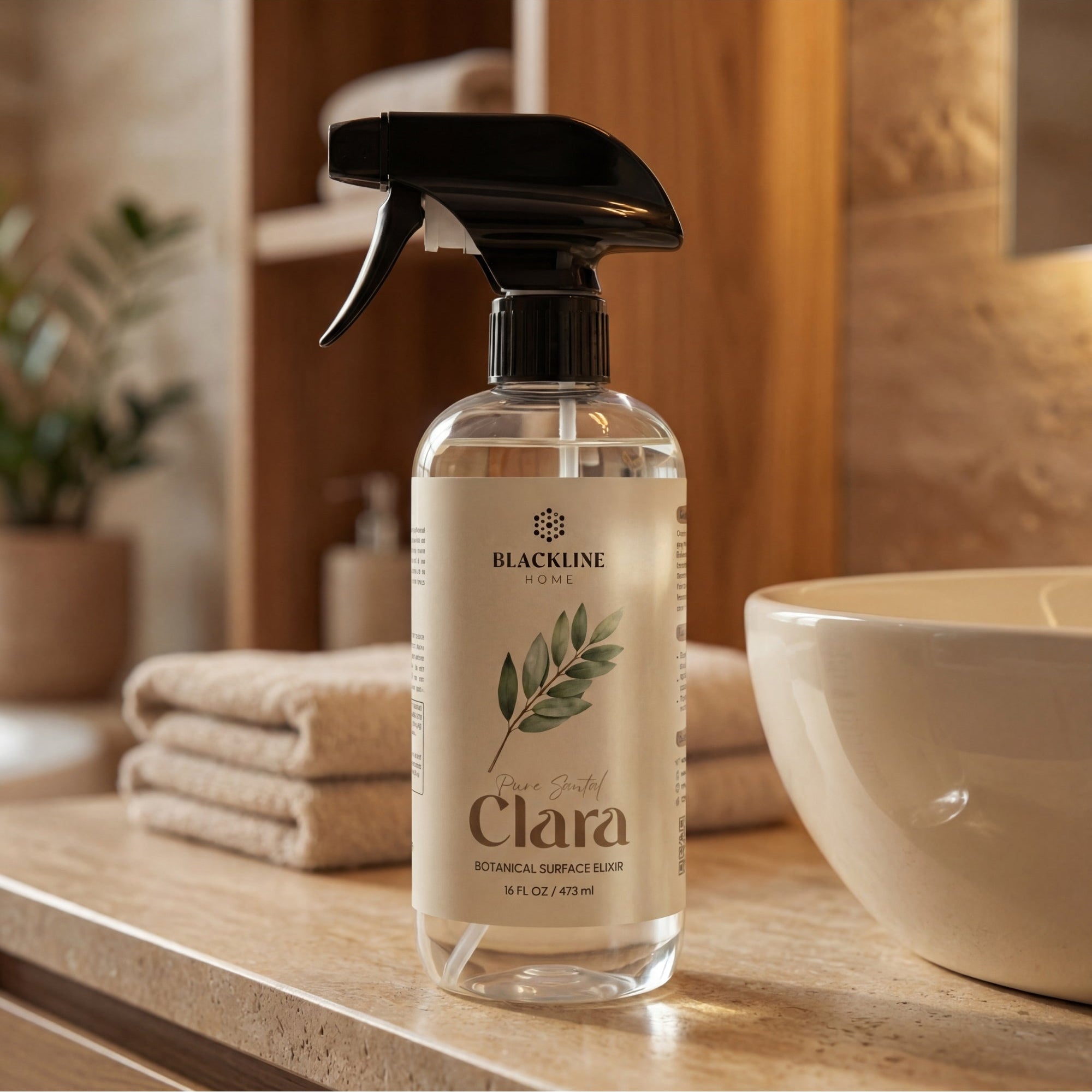
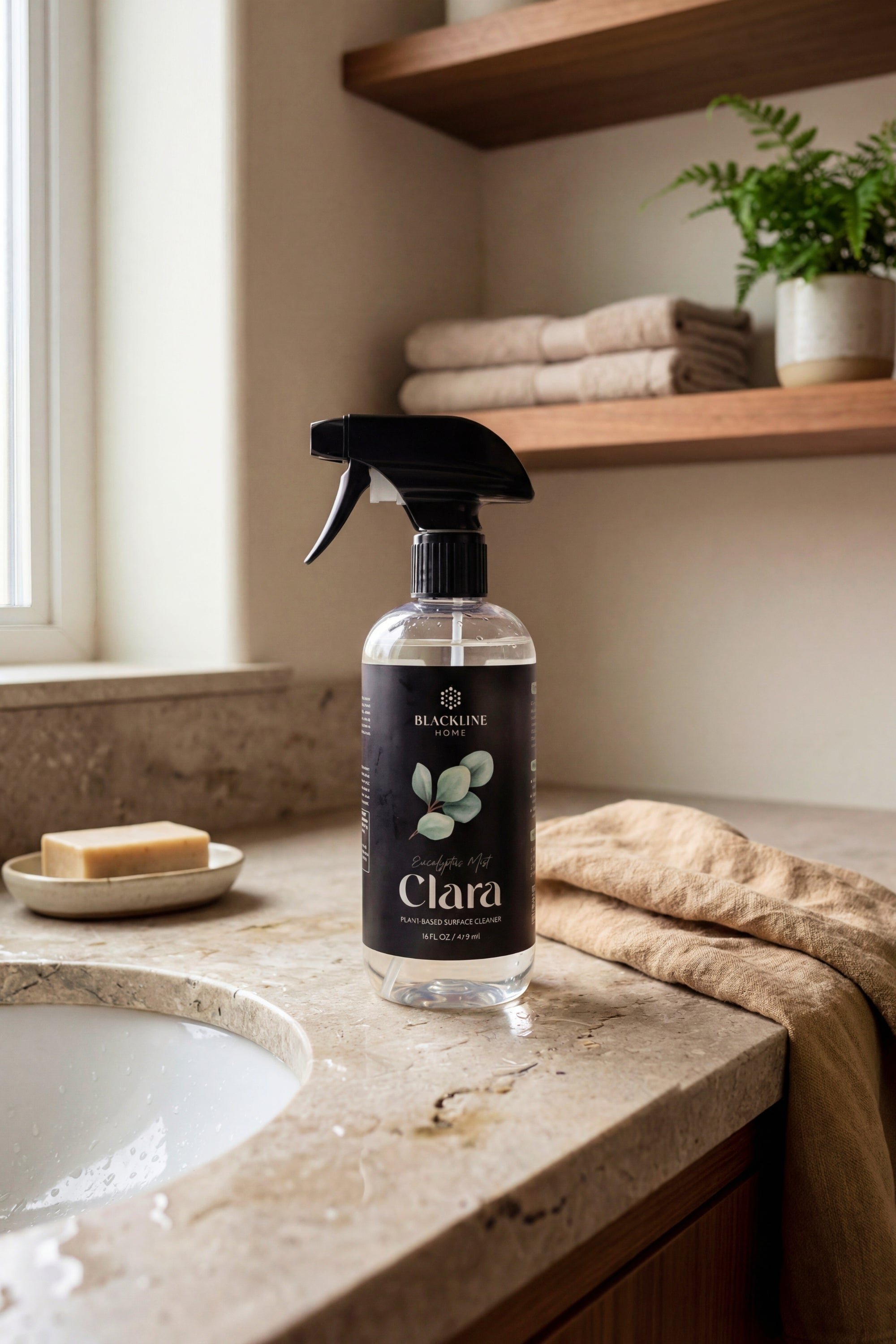
Clara uses a plant-derived surfactant system specifically because it delivers the cleaning performance people expect while aligning with the values of people who care about what they're bringing into their home.
Here is something most people don't know: every liquid cleaning product requires a preservation system. Without it, the formula would grow bacteria and mold over time and become unsafe to use. The question isn't whether a cleaner is preserved. The question is how.
Conventional cleaners often use synthetic preservatives, some of which are known irritants or allergens with long-term exposure concerns. The most scrutinized among them are formaldehyde-releasing agents, which are still found in many household and personal care products on the market today.
Clara's preservation system uses citric acid and potassium sorbate. If those names sound familiar, it's because you've eaten them. Citric acid is the natural compound that gives lemons their tartness and is one of the most common food additives in the world. Potassium sorbate is used to preserve everything from yogurt to wine. Both are food-grade, widely studied, and recognized as safe by global food and health agencies.
Using ingredients you'd find in your kitchen to preserve your cleaning products isn't just a marketing angle. It's a philosophy about what belongs in your home.
You've probably seen certifications on products before and wondered how meaningful they actually are. The EPA Safer Choice program is one of the more rigorous ones in the cleaning and household product space, and it's worth understanding what it actually requires.
To receive EPA Safer Choice certification, every ingredient in a product must be reviewed and approved by the Environmental Protection Agency against strict criteria for human health and environmental safety. This includes surfactants, fragrances, preservatives, solvents, and packaging materials. The process is thorough, third-party validated, and not something a brand can self-declare.
Blackline Home is currently in the process of obtaining EPA Safer Choice certification for the Natural line. Until that certification is formally granted, we will only ever refer to it as pending. We won't imply it exists before it does, because the integrity of that claim matters to us as much as it matters to you.
When it arrives, it will be the single most powerful thing we can put on our label, because it will mean an independent federal agency has reviewed everything inside the bottle and agreed that it meets the highest safety standards available.
You don't need a chemistry degree to make a more informed decision. Here are a few simple things to look for the next time you pick up a cleaning product.
Look for surfactant transparency. Does the brand tell you what kind of surfactants are in the product and where they come from? If the label just says "cleaning agents" with no further detail, that's a signal the brand isn't interested in full transparency.
Check the fragrance disclosure. "Fragrance" listed as a single ingredient can legally represent hundreds of individual chemical compounds, none of which have to be disclosed. Brands committed to safety will specify whether their scents come from essential oils or will disclose their fragrance ingredients more fully.
Look for third-party validation. Any brand can call itself natural or plant-based. Certifications like EPA Safer Choice, USDA Certified Biobased, or NSF require external verification. They carry weight because they require accountability.
And finally, ask yourself whether the brand is willing to tell you what's not in their product as clearly as they tell you what is. Transparency in both directions is the mark of a brand that takes its responsibility seriously.
The goal of this breakdown isn't to make cleaning products feel complicated. It's actually the opposite. When you understand what you're looking for and why it matters, the decision gets simpler. Plant-based surfactants from renewable sources. Food-grade preservatives you'd recognize from your pantry. Third-party certification from an agency with real standards.
That's what's in Clara. And we think once you know what that means, you'll understand why it makes a difference.
Want to see the full ingredient list? Every component in Clara is disclosed on our website, because we think you have every right to know exactly what you're bringing into your home.
Your home. Your standards. Your choice.