
- by Kody Ortner
The Science of Scent: How Aromatherapy While Cleaning Can Actually Change Your Mood
- by Kody Ortner
Most of us were taught that cleaning is something you push through. You put on a podcast, you get it done, and you reward yourself when it's over. The cleaning itself is just the unpleasant middle part.
But what if the act of cleaning could actually be the reward?
That idea might sound like a stretch, but there is real neuroscience behind it. The way scent interacts with your brain is unlike any other sense, and when you understand how it works, you start to see why the right fragrance during a cleaning ritual isn't just a nice touch. It's a legitimate tool for shifting your mental state.
When you see something, hear something, or feel something, that sensory information travels through the thalamus, the brain's central relay station, before reaching the areas responsible for conscious thought and emotion. There is a processing step in between. A brief moment of interpretation before a feeling arrives.
Scent doesn't work that way.
Olfactory signals, the information carried by smell, travel directly to the limbic system without passing through that relay. The limbic system is the part of your brain responsible for emotion, memory, and motivation. It's the most primal and emotionally loaded region of the entire brain, and scent has a direct line to it that no other sense does.
This is why a smell can stop you in your tracks and take you back to a specific moment from fifteen years ago before you've had a single conscious thought about it. It's why hospitals use certain scents to reduce patient anxiety. It's why the smell of a freshly cleaned home feels like relief rather than just cleanliness.
Scent doesn't just accompany an emotional experience. In the right context, it can create one.
Here is where it gets particularly useful for a weekly cleaning ritual.
The limbic system is not just reactive. It's associative. When a specific scent is consistently paired with a specific experience or emotional state, the brain begins to link the two together. Over time, the scent alone can begin to trigger the emotional state, even before the experience has fully begun.
This is a well documented phenomenon in behavioral psychology known as classical conditioning, and it's the same mechanism that makes certain songs feel like summer or the smell of coffee feel like the start of a productive day before you've taken a single sip.
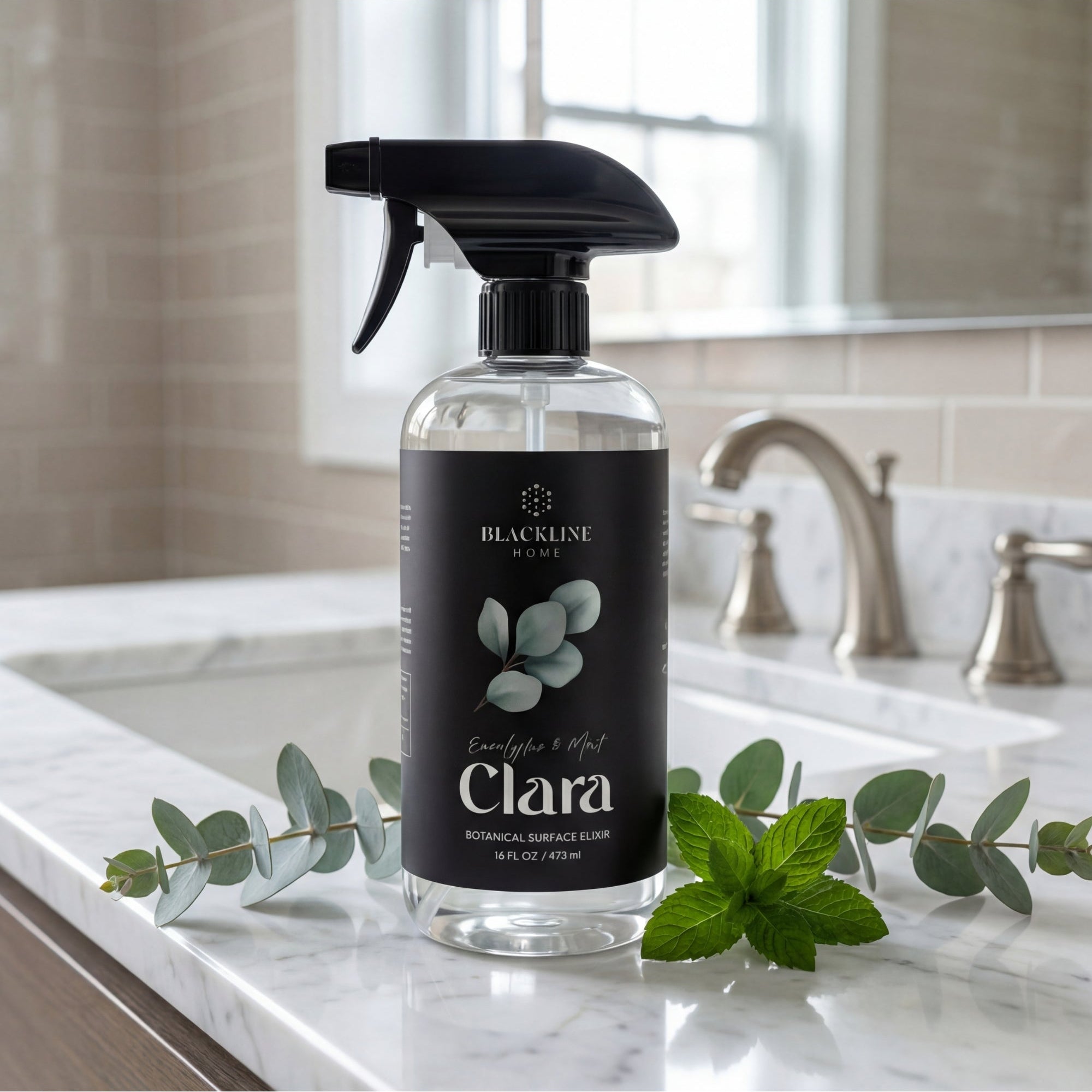
When you use the same scents every Sunday during your reset, you are actively building that association. A few weeks in, opening a bottle of Eucalyptus Mist on a Sunday afternoon doesn't just smell good. It tells your nervous system that something intentional is about to happen. That you are about to take control. That calm is coming.
That signal gets stronger every single week you repeat it.
Every scent in the Natural line was chosen with a specific emotional state and time-of-day use occasion in mind. These aren't random fragrances. Each one is calibrated to do something.
Eucalyptus Mist: Clarity and Focus
Eucalyptus is one of the most studied aromatherapeutic ingredients in the world. Its primary active compound, 1,8-cineole, has been shown in multiple studies to support cognitive performance, mental clarity, and alertness. It's crisp, clean, and immediately activating without being overwhelming.
Eucalyptus Mist is the anchor scent of the Natural line for good reason. It works at any time of day, for any surface, in any room. If you're only going to start with one scent, this is the one. It smells like a spa and cleans like it means it.
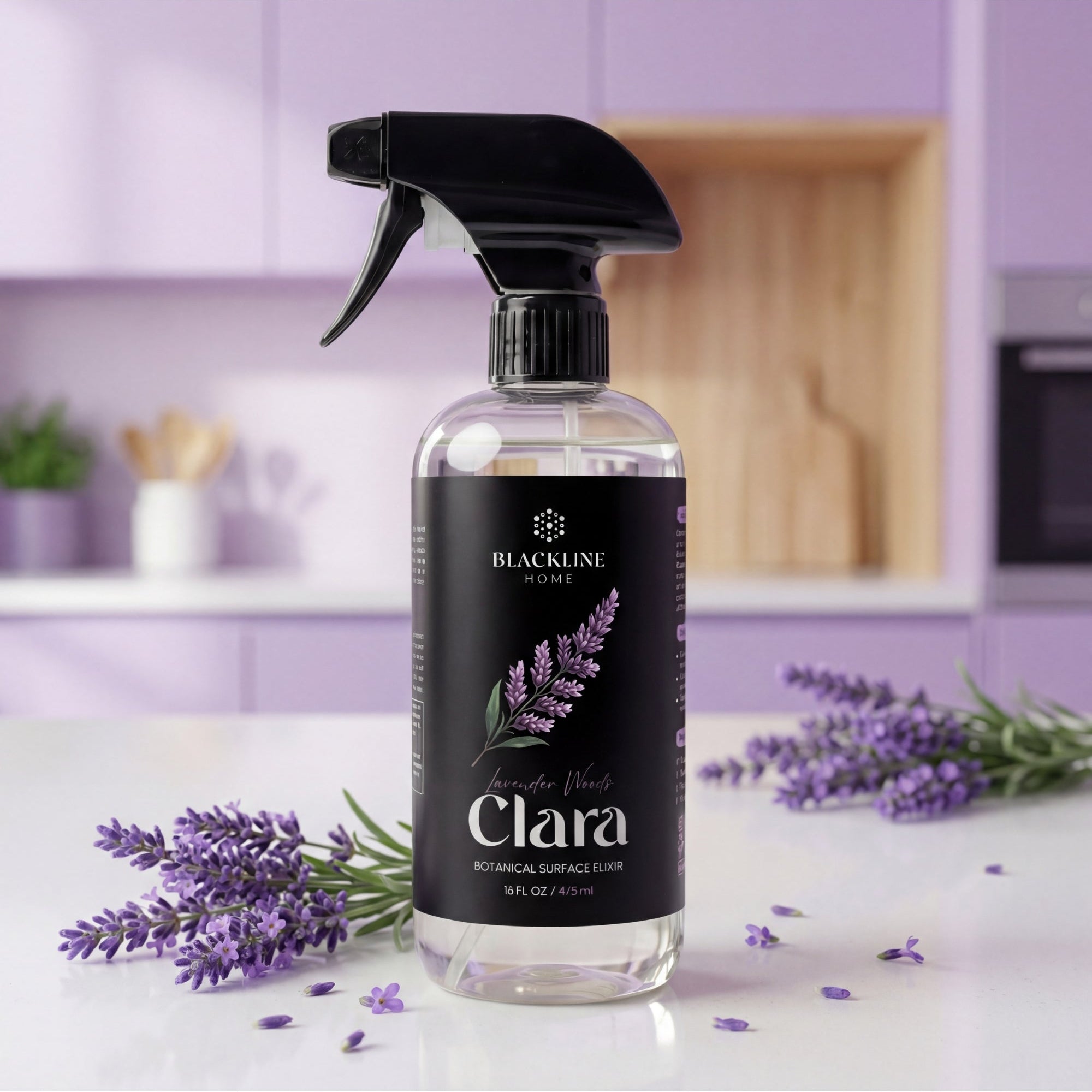
Lavender Woods: Calm and the Wind-Down
Lavender has one of the longest histories in aromatherapy of any plant. Its calming properties are well documented, with research linking lavender inhalation to reduced heart rate, lower cortisol levels, and improved sleep quality. The grounding addition of wood notes in Lavender Woods adds depth and a sense of rootedness that pure lavender alone doesn't always deliver.
This scent is designed for the end of your reset. Use it in the bedroom, in the bathroom before a bath, or as an evening room spray when you're transitioning from doing to resting. It's the scent equivalent of exhaling.
Pure Santal: Grounding and Meditation
Sandalwood has been used in meditation and ritual practices across cultures for centuries, and there is emerging research to support what practitioners have long believed. Its warm, woody aroma has been associated with reduced anxiety and a deepened sense of presence.
Pure Santal is gender-neutral, sophisticated, and intentionally free of anything fussy or floral. It's for people who want the ritual without the frills. Use it when you want your space to feel elevated and grounded at the same time.
Citrus Grove: Energy and the Fresh Start
Citrus scents are among the most reliable mood elevators in aromatherapy research. The bright, sharp notes of citrus have been shown to increase alertness and positive affect, making them particularly effective in the morning or in spaces associated with activity and energy.
Citrus Grove was designed for the kitchen and the morning reset. It's the scent you reach for when you want to feel like things are looking up. Bright, optimistic, and immediately energizing without any of the artificial sweetness that cheap citrus fragrances tend to carry.
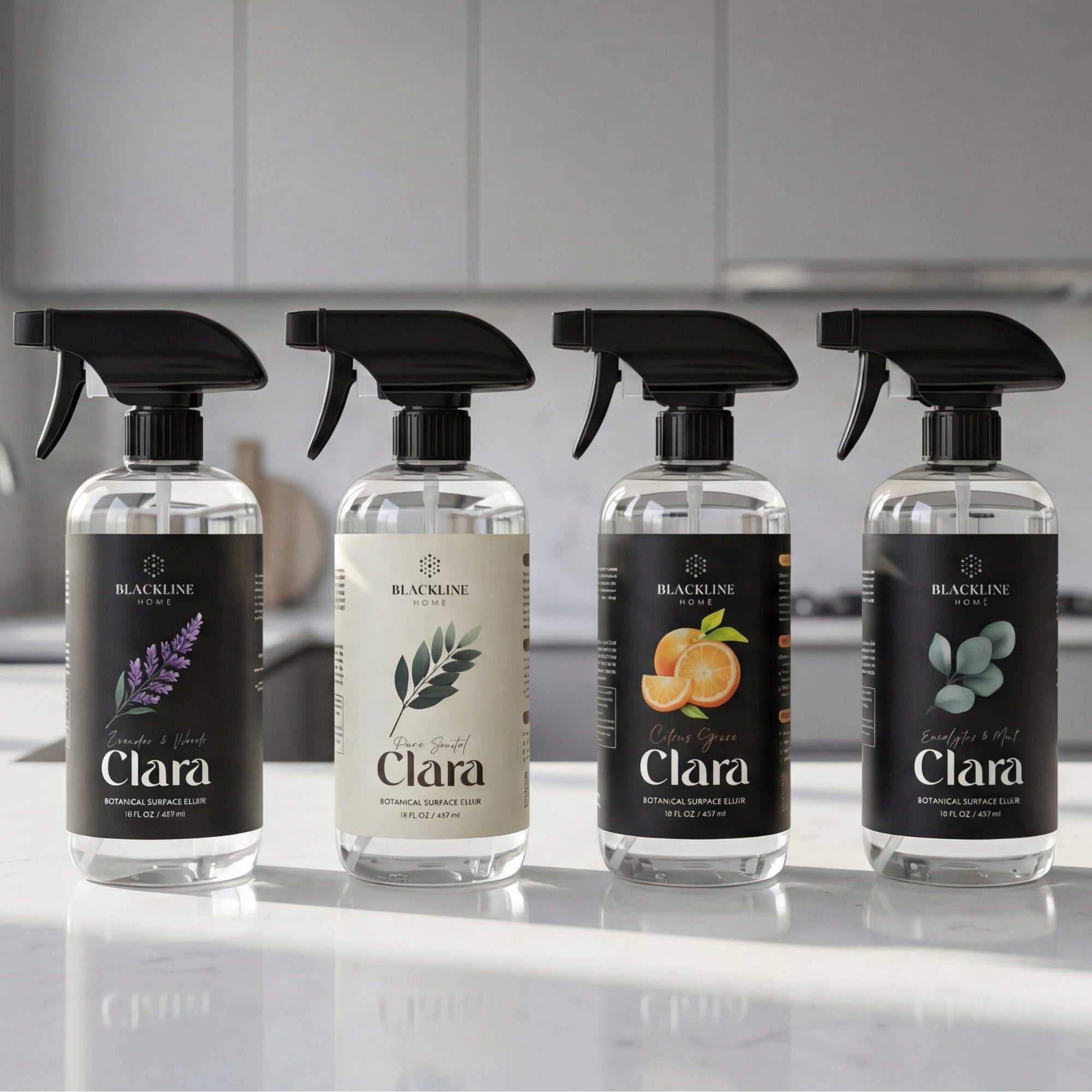
One of the easiest ways to get more out of the Natural line is to treat your scents the way you might treat your lighting. Brighter and more activating in the morning, warmer and softer as the day winds down.
A simple framework to start with: reach for Citrus Grove in the kitchen during your morning routine. Use Eucalyptus Mist throughout the active cleaning portions of your Sunday Reset. Transition to Lavender Woods or Pure Santal in the evening when the work is done and you're ready to let the week go.
Over time you'll develop your own rhythm. That's the point. The scents are a starting framework, not a rule.
There is a reason that across nearly every culture and throughout recorded history, the act of cleaning a space has been tied to ceremony, ritual, and the marking of transitions. New beginnings, fresh starts, the clearing of what was to make room for what comes next.
The neuroscience just gives us a modern language for something people have intuitively understood for a long time. Your environment shapes how you feel. The process of caring for it, especially when done with intention and sensory richness, shapes how you feel even more.
The right scent doesn't just make your home smell good. It makes the whole ritual feel worth doing.
Not sure which scent is right for you? Let your mood, your routine, and your space guide the choice.
Your ritual. Your scent. Your reset.